♔ Learn Chess Rules
Master the fundamentals of chess with our comprehensive guide. From basic piece movements to advanced strategies.
♜ The Chessboard
Chess is played on a square board divided into 64 squares (8×8 grid) of alternating light and dark colors. The board is positioned so that each player has a white (light) square on their right-hand corner.
Board Coordinates
Each square has a unique name using a letter (a-h) for the column (called "file") and a number (1-8) for the row (called "rank"). For example, the white king starts on e1, and the black king starts on e8.
White always moves first. The board should be set up with the white queen on a white square and the black queen on a black square (Queen on her own color).
♛ Chess Pieces
Each player starts with 16 pieces: 1 King, 1 Queen, 2 Rooks, 2 Bishops, 2 Knights, and 8 Pawns. Each type of piece moves differently.

King
Most important

Queen
Most powerful
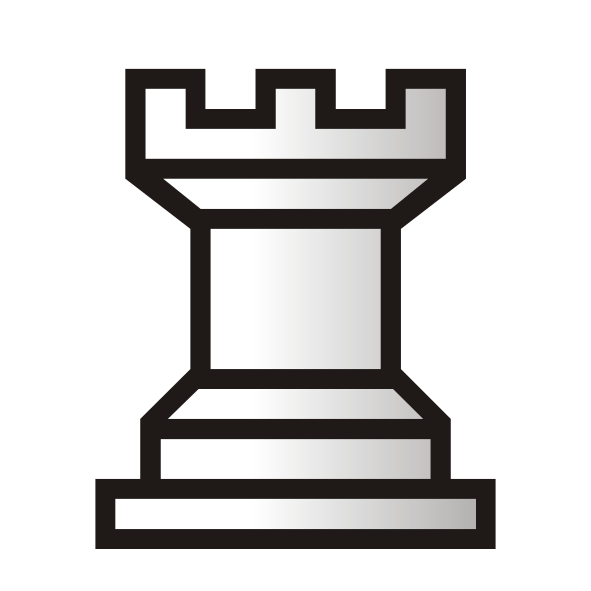
Rook
Value: ~5 points
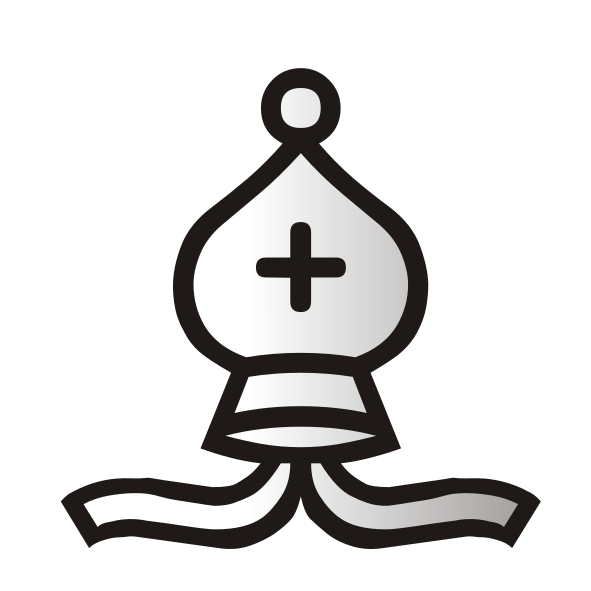
Bishop
Value: ~3 points

Knight
Value: ~3 points

Pawn
Value: 1 point
♔ The King
The King is the most important piece in chess. If your King is checkmated, you lose the game. The King can move one square in any direction: horizontally, vertically, or diagonally.
The King cannot move to a square where it would be in check (attacked by an enemy piece). Also, two Kings can never stand next to each other.
♕ The Queen
The Queen is the most powerful piece on the board. She can move any number of squares horizontally, vertically, or diagonally (combining the powers of the Rook and Bishop).
While the Queen is powerful, avoid bringing her out too early in the game. She can become a target for your opponent's pieces.
♖ The Rook
The Rook moves any number of squares horizontally or vertically. Rooks are particularly powerful in the endgame and when working together (called "connected rooks").
Rooks are also involved in a special move called "Castling" (covered in the Special Moves section).
♗ The Bishop
The Bishop moves any number of squares diagonally. Each player has two Bishops: one that moves on light squares and one that moves on dark squares. A Bishop always stays on the same color squares throughout the game.
Having both Bishops (the "Bishop pair") is often advantageous because together they can control all squares on the board.
♘ The Knight
The Knight has the most unique movement pattern. It moves in an "L-shape": two squares in one direction and then one square perpendicular to that (or vice versa). The Knight is the only piece that can jump over other pieces.
Notice how the Knight always lands on a different color square than the one it started on. This makes Knights excellent for reaching squares that other pieces can't easily access.
♙ The Pawn
Pawns are the most numerous pieces but have unique movement rules. They move forward one square but capture diagonally. On their first move, pawns can optionally move two squares forward.
Pawn Rules:
- Forward Movement: Pawns can only move forward, never backward
- First Move: Can move 1 or 2 squares forward from starting position
- Capturing: Pawns capture diagonally, one square forward
- Promotion: When a pawn reaches the opposite end of the board, it must be promoted to any piece (except King) - usually a Queen
✨ Special Moves
Castling
Castling is a special move involving the King and a Rook. The King moves two squares toward a Rook, and the Rook moves to the square the King crossed. This is the only move where two pieces move at once.
Castling Requirements:
- Neither the King nor the Rook has moved before
- No pieces between the King and Rook
- The King is not in check
- The King does not pass through or land on a square attacked by an enemy piece
En Passant
"En passant" (French for "in passing") is a special pawn capture. When a pawn advances two squares from its starting position and lands beside an opponent's pawn, that opponent can capture it as if it had only moved one square.
En passant must be done immediately on the next move, or the right to capture en passant is lost.
Pawn Promotion
When a pawn reaches the opposite end of the board (8th rank for White, 1st rank for Black), it must be promoted to another piece: Queen, Rook, Bishop, or Knight. Most players choose a Queen as it's the most powerful piece.
⚔️ Check & Checkmate
Check
When a King is under attack by an opponent's piece, it is in "check." The player must get out of check on their next move. There are three ways to escape check:
- Move the King to a safe square
- Block the check by placing a piece between the King and the attacking piece
- Capture the attacking piece
Checkmate
Checkmate occurs when the King is in check and there is no legal move to escape. The game ends immediately, and the player delivering checkmate wins.
The goal of chess is to checkmate your opponent's King, not necessarily to capture all their pieces.
🤝 Draws
Not all chess games end with a winner. A game can end in a draw (tie) in several ways:
Stalemate
If a player has no legal moves and their King is NOT in check, it's a stalemate (draw). The player is not in check but cannot make any move without putting their King in check.
Insufficient Material
The game is drawn when neither player has enough pieces to deliver checkmate:
- King vs. King
- King and Bishop vs. King
- King and Knight vs. King
- King and Bishop vs. King and Bishop
Other Draw Conditions
- Threefold Repetition: The same position occurs three times with the same player to move
- Fifty-Move Rule: 50 moves by both players without a pawn move or capture
- Agreement: Both players agree to a draw
Ready to Play?
Now that you know the rules, put your knowledge to the test by playing against Stockfish, the world's strongest chess engine!
♟️ Play Against Stockfish